Buy la-grande.eu ?
We are moving the project
la-grande.eu .
Are you interested in purchasing the domain
la-grande.eu ?
domain@kv-gmbh.de · 0541-91531010
Buy la-grande.eu ?
What are biblical archetypes?
Biblical archetypes are recurring symbols, characters, or themes found throughout the Bible that represent universal human experiences, emotions, or truths. These archetypes often serve as a model or pattern for understanding and interpreting the world and our own lives. Examples of biblical archetypes include the hero, the villain, the journey, the sacrifice, and the redemption, which can be found in various stories and characters throughout the Bible. These archetypes provide a framework for understanding the human condition and the spiritual journey. **
What are the archetypes of C.G. Jung?
C.G. Jung identified several archetypes that he believed were universal symbols or themes that appear in the collective unconscious of all people. Some of the key archetypes include the persona (the social mask we present to the world), the shadow (the darker, unconscious side of our personality), the anima/animus (the feminine and masculine aspects within each individual), the self (the striving for wholeness and integration), and the hero (the figure who overcomes challenges and achieves greatness). Jung believed that recognizing and integrating these archetypes into our consciousness could lead to personal growth and self-realization. **


Similar search terms for Archetypes
Top-Angebote
Products related to Archetypes:
-
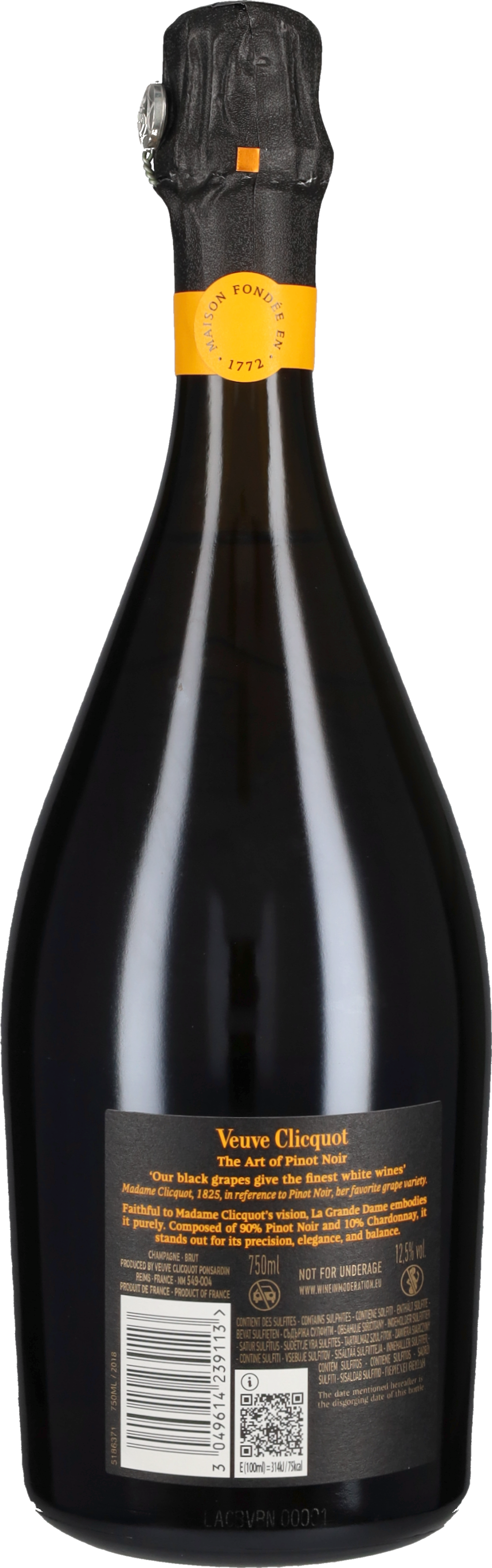
Champagne Brut 'La Grande Dame' Veuve Clicquot 2018The Champagne Brut “La Grande Dame” by Veuve Clicquot is the undisputed symbol of the prestigious winery of Montagne de Reims. The Maison was founded over 250 years ago when Francois Clicquot decided to sell his bubbles. His wife Barbe-Nicole Ponsardin, who was widowed at 27, took over the winery and expanded and perfected her husband’s project, earning the name Grande Dame of Champagne. This memorable label was launched in 1972 with the vintage of 1962, in honor of the 200th anniversary of its founding. Veuve Clicquot's motto is “only one quality, the best,” and this Champagne embodies it perfectly.“La Grande Dame” is certainly unique, and it is no coincidence that only 18 cuvèes have been produced in the last 50 years. It is made only in the best vintages chosen by the chef de cave and is obtained from 10% Chardonnay and 90% Pinot Noir, Madame Clicquot's favorite grape. Both grape varieties are harvested and blended from vineyards owned by six Grands Cru villages, some of which were indeed purchased by the Grande Dame. The The Chardonnay component imparts softness and strength, maintaining the elegance and finesse of Pinot Noir. The long aging of almost 10 years in the chalk cellars, a UNESCO heritage site, allows it to reach its full expressive maturity and to remain for a long time.This Champagne from Veuve Clicquot presents itself with a sparkling golden robe, shining and dazzling, and the fine, persistent, and rich perlage contributes to enlivening it. On the nose, it's a harmony of varietal aromas that gradually open in the glass. The yellow-fleshed fruit and small floral touches are guided by notes of hazelnut, almond, and bread crust. The taste is perfectly balanced, an absolute synthesis of strength and class, without neglecting a delightful youthful freshness. In short, one could talk for hours about this sparkling wine, but we leave the final word to you!187,00 £*Shipping: 48,00 £Secure redirect to the provider
-
Champagne Brut 'La Grande Dame' Veuve Clicquot 2008The Champagne Brut “La Grande Dame” by Veuve Clicquot is the undisputed symbol of the prestigious winery of Montagne de Reims. The Maison was founded over 250 years ago when Francois Clicquot decided to sell his bubbles. His wife Barbe-Nicole Ponsardin, who became a widow at 27, took over the winery and expanded and perfected her husband’s project, earning the name Grande Dame of Champagne. This memorable label was launched in 1972 with the vintage of 1962, in honor of the 200th anniversary of the foundation. The motto of Veuve Clicquot is “only one quality, the best,” and this Champagne embodies it perfectly. “La Grande Dame” is certainly unique, and it is no coincidence that only 18 cuvées have been produced in the last 50 years. It is made only in the best vintages chosen by the chef de cave and is composed of 8% Chardonnay and 92% Pinot Noir, harvested and blended from the vineyards of six Grands Cru villages, some of which were indeed purchased by the Grande Dame. The Chardonnay component gives softness and strength while maintaining the elegance and finesse of the Pinot Noir. The a long aging of almost 10 years in the chalk cellars, a UNESCO heritage site, allows it to reach its full expressive maturity and to last for a long time. This Champagne from Veuve Clicquot presents itself with a shimmering golden cloak, shining and dazzling, and the fine, persistent, and rich perlage contributes to enlivening and brightening it. On the nose, it is a harmony of varietal aromas that gradually open up in the glass. Yellow-fleshed fruit and small floral touches are guided by notes of hazelnut, almond, and bread crust. The taste is perfectly balanced, an absolute synthesis of strength and class, without neglecting a very pleasant youthful freshness. In short, one could go on for hours talking about this bubbly, but we’ll leave the last word to you!209,00 £*Shipping: 48,00 £Secure redirect to the provider
-
Champagne Brut 'La Grande Dame' Veuve Clicquot 2012long aging of nearly 10 years in the chalk cellars, a UNESCO heritage site, allows it to reach its full expressive maturity and to maintain itself for a long time. This Champagne from Veuve Clicquot presents itself with a sparkling golden robe, shining and dazzling, and the fine, persistent, and rich perlage contributes to ignite and enliven it. On the nose, it is a harmony of varietal aromas that gradually open up in the glass. Yellow-fleshed fruit and small floral touches are guided by notes of hazelnut, almond, and bread crust. The taste is perfectly balanced, an absolute synthesis of strength and class, without neglecting a very pleasant youthful freshness. In short, one could go on for hours talking about this bubbly, but we leave the last word to you!long aging of nearly 10 years in the chalk cellars, a UNESCO heritage site, allows it to reach its full expressive maturity and to maintain itself for a long time. This Champagne from Veuve Clicquot presents itself with a sparkling golden robe, shining and dazzling, and the fine, persistent, and rich perlage contributes to ignite and enliven it. On the nose, it is a harmony of varietal aromas that gradually open up in the glass. Yellow-fleshed fruit and small floral touches are guided by notes of hazelnut, almond, and bread crust. The taste is perfectly balanced, an absolute synthesis of strength and class, without neglecting a very pleasant youthful freshness. In short, one could go on for hours talking about this bubbly, but we leave the last word to you!195,00 £*Shipping: 48,00 £Secure redirect to the provider


-
Are there different soul types or family archetypes?
Yes, some belief systems and spiritual practices suggest that there are different soul types or family archetypes. These can include concepts such as old souls, young souls, warrior souls, healer souls, and more. Each soul type is believed to have unique characteristics, purposes, and lessons to learn in their lifetime. Understanding these soul types or family archetypes can help individuals gain insight into their own spiritual journey and relationships with others. **
-
What is the difference between archetypes and stereotypes?
Archetypes are universal symbols or themes that represent shared human experiences and emotions, often found in literature, mythology, and art. They are timeless and can be interpreted in various ways. On the other hand, stereotypes are oversimplified and generalized beliefs about a particular group of people, often based on assumptions or prejudices. Stereotypes can be harmful as they limit individuals to a narrow set of characteristics, while archetypes are more complex and can be used to explore deeper aspects of the human psyche. **
-
How can images and pictures be used as archetypes?
Images and pictures can be used as archetypes by representing universal symbols and themes that are deeply ingrained in the human psyche. For example, a picture of a mother and child can evoke the archetype of nurturing and protection. Similarly, an image of a tree can symbolize growth, strength, and connection to the earth. By tapping into these archetypal images, artists and storytellers can convey powerful and resonant messages that transcend cultural and linguistic barriers. Additionally, these archetypal images can evoke strong emotional responses and connect with audiences on a subconscious level. **
-
How can the difference between the collective unconscious and archetypes be explained simply?
The collective unconscious is a concept introduced by Carl Jung, which refers to the shared reservoir of memories and experiences that all humans inherit. Archetypes, on the other hand, are universal symbols or themes that arise from the collective unconscious and are expressed in various cultures and individuals. In simpler terms, the collective unconscious is like a vast library of human experiences, while archetypes are the common themes or characters found within that library that appear in myths, stories, and dreams. **
How can the difference between the collective unconscious and the archetypes be explained simply?
The collective unconscious is a shared reservoir of memories and experiences that all humans inherit from their ancestors, while archetypes are universal symbols or themes that arise from the collective unconscious. In simpler terms, the collective unconscious is like a vast library of human experiences that we all have access to, while archetypes are the common patterns or characters that appear in myths, stories, and dreams. Essentially, the collective unconscious is the source, and archetypes are the recurring themes or symbols that emerge from it. **
How can the difference between the collective unconscious and the archetypes be simply explained?
The collective unconscious refers to the shared reservoir of memories, experiences, and images that are inherited from our ancestors and are common to all humans. It is a part of the unconscious mind that is shared by all people across cultures. On the other hand, archetypes are universal symbols and patterns that emerge from the collective unconscious. They are recurring themes or motifs that are present in myths, stories, and dreams and represent fundamental human experiences and emotions. In simple terms, the collective unconscious is the deep well of shared human experiences, while archetypes are the specific symbols and patterns that arise from this collective unconscious. **
Top-Angebote
Products related to Archetypes:
-
Possum Creek GM-less Gothic Tabletop RPG - Late-Victorian London - Gothic ArchetypesImmerse yourself in a haunting vision of late-Victorian London with Grand Guignol, a GM-less Gothic tabletop role-playing game. Players take on distinctive Gothic archetypes and work together to shape the city, its hidden communities, and the unsettling forces that surround them. The game explores themes of monstrosity, queerness, intimacy, and community against a backdrop of gaslit streets, oppressive institutions, and fragile social bonds. By collaborating to build the setting and story, the group discovers secret histories and decides how characters respond to danger, prejudice, and supernatural intrigue. This game is perfect for players who enjoy atmospheric, character-led adventures and are looking for a unique, collaborative experience.28,74 £*Shipping: 3,95 £Secure redirect to the provider
-
Spumante Metodo Classico Brut 'La Grande Famille' PellegrinoThe Metodo Classico 'La Grande Famille' Brut sparkling wine by Pellegrino is a fragrant and balanced bubbly produced in Sicily from Pinot Nero grapes, a Blanc de Noir, as the French would say. This label pays tribute to Josephine Despagne, a French lady and daughter of the oenologist Oscar Pierre Despagne, who married Carlo Pellegrino at the end of the 19th century, co-founder of the Pellegrino winery with his father Paolo. A woman of great kindness and humanity, Josephine loved to refer to the family's collaborators as "la grande famille," hence the name of this sparkling wine. The Metodo Classico 'La Grande Famille' Pellegrino Brut sparkling wine is produced from a rigorous selection of Pinot Nero grapes handpicked during the first decade of August. In the cellar, the whole clusters are gently pressed with a yield of only 55%, and the musts undergo spontaneous settling. Alcoholic fermentation takes place in temperature-controlled stainless steel tanks, and subsequently, the sparkling bases are left to mature for several months in contact with the yeasts, preventing the development of malolactic fermentation through low temperatures. At this point, the final base is prepared, which is then bottled with the addition of tirage syrup for refermentation in the bottle according to the Metodo Classico, accompanied by at least 24 months of aging on the lees. After disgorging, the wine is finally dosed as Brut with about 6-7 g/l of residual sugars. 'La Grande Famille' Metodo Classico Brut Sparkling Wine by Pellegrino has a bright straw yellow color with greenish reflections and evanescent effervescence. The nose reveals delicate aromas of white peach and bread crust, as well as floral and toasted nut hints. Creamy, rich, and balanced on the palate, with a fresh and savory finish of good citrus persistence.24,00 £*Shipping: 48,00 £Secure redirect to the provider
-
Champagne Brut 'La Grande Dame' Veuve Clicquot 2018The Champagne Brut “La Grande Dame” by Veuve Clicquot is the undisputed symbol of the prestigious winery of Montagne de Reims. The Maison was founded over 250 years ago when Francois Clicquot decided to sell his bubbles. His wife Barbe-Nicole Ponsardin, who was widowed at 27, took over the winery and expanded and perfected her husband’s project, earning the name Grande Dame of Champagne. This memorable label was launched in 1972 with the vintage of 1962, in honor of the 200th anniversary of its founding. Veuve Clicquot's motto is “only one quality, the best,” and this Champagne embodies it perfectly.“La Grande Dame” is certainly unique, and it is no coincidence that only 18 cuvèes have been produced in the last 50 years. It is made only in the best vintages chosen by the chef de cave and is obtained from 10% Chardonnay and 90% Pinot Noir, Madame Clicquot's favorite grape. Both grape varieties are harvested and blended from vineyards owned by six Grands Cru villages, some of which were indeed purchased by the Grande Dame. The The Chardonnay component imparts softness and strength, maintaining the elegance and finesse of Pinot Noir. The long aging of almost 10 years in the chalk cellars, a UNESCO heritage site, allows it to reach its full expressive maturity and to remain for a long time.This Champagne from Veuve Clicquot presents itself with a sparkling golden robe, shining and dazzling, and the fine, persistent, and rich perlage contributes to enlivening it. On the nose, it's a harmony of varietal aromas that gradually open in the glass. The yellow-fleshed fruit and small floral touches are guided by notes of hazelnut, almond, and bread crust. The taste is perfectly balanced, an absolute synthesis of strength and class, without neglecting a delightful youthful freshness. In short, one could talk for hours about this sparkling wine, but we leave the final word to you!187,00 £*Shipping: 48,00 £Secure redirect to the provider
-
Champagne Brut 'La Grande Dame' Veuve Clicquot 2008The Champagne Brut “La Grande Dame” by Veuve Clicquot is the undisputed symbol of the prestigious winery of Montagne de Reims. The Maison was founded over 250 years ago when Francois Clicquot decided to sell his bubbles. His wife Barbe-Nicole Ponsardin, who became a widow at 27, took over the winery and expanded and perfected her husband’s project, earning the name Grande Dame of Champagne. This memorable label was launched in 1972 with the vintage of 1962, in honor of the 200th anniversary of the foundation. The motto of Veuve Clicquot is “only one quality, the best,” and this Champagne embodies it perfectly. “La Grande Dame” is certainly unique, and it is no coincidence that only 18 cuvées have been produced in the last 50 years. It is made only in the best vintages chosen by the chef de cave and is composed of 8% Chardonnay and 92% Pinot Noir, harvested and blended from the vineyards of six Grands Cru villages, some of which were indeed purchased by the Grande Dame. The Chardonnay component gives softness and strength while maintaining the elegance and finesse of the Pinot Noir. The a long aging of almost 10 years in the chalk cellars, a UNESCO heritage site, allows it to reach its full expressive maturity and to last for a long time. This Champagne from Veuve Clicquot presents itself with a shimmering golden cloak, shining and dazzling, and the fine, persistent, and rich perlage contributes to enlivening and brightening it. On the nose, it is a harmony of varietal aromas that gradually open up in the glass. Yellow-fleshed fruit and small floral touches are guided by notes of hazelnut, almond, and bread crust. The taste is perfectly balanced, an absolute synthesis of strength and class, without neglecting a very pleasant youthful freshness. In short, one could go on for hours talking about this bubbly, but we’ll leave the last word to you!209,00 £*Shipping: 48,00 £Secure redirect to the provider
-
What are biblical archetypes?
Biblical archetypes are recurring symbols, characters, or themes found throughout the Bible that represent universal human experiences, emotions, or truths. These archetypes often serve as a model or pattern for understanding and interpreting the world and our own lives. Examples of biblical archetypes include the hero, the villain, the journey, the sacrifice, and the redemption, which can be found in various stories and characters throughout the Bible. These archetypes provide a framework for understanding the human condition and the spiritual journey. **
-
What are the archetypes of C.G. Jung?
C.G. Jung identified several archetypes that he believed were universal symbols or themes that appear in the collective unconscious of all people. Some of the key archetypes include the persona (the social mask we present to the world), the shadow (the darker, unconscious side of our personality), the anima/animus (the feminine and masculine aspects within each individual), the self (the striving for wholeness and integration), and the hero (the figure who overcomes challenges and achieves greatness). Jung believed that recognizing and integrating these archetypes into our consciousness could lead to personal growth and self-realization. **
-
Are there different soul types or family archetypes?
Yes, some belief systems and spiritual practices suggest that there are different soul types or family archetypes. These can include concepts such as old souls, young souls, warrior souls, healer souls, and more. Each soul type is believed to have unique characteristics, purposes, and lessons to learn in their lifetime. Understanding these soul types or family archetypes can help individuals gain insight into their own spiritual journey and relationships with others. **
-
What is the difference between archetypes and stereotypes?
Archetypes are universal symbols or themes that represent shared human experiences and emotions, often found in literature, mythology, and art. They are timeless and can be interpreted in various ways. On the other hand, stereotypes are oversimplified and generalized beliefs about a particular group of people, often based on assumptions or prejudices. Stereotypes can be harmful as they limit individuals to a narrow set of characteristics, while archetypes are more complex and can be used to explore deeper aspects of the human psyche. **
Similar search terms for Archetypes
-
Champagne Brut 'La Grande Dame' Veuve Clicquot 2012long aging of nearly 10 years in the chalk cellars, a UNESCO heritage site, allows it to reach its full expressive maturity and to maintain itself for a long time. This Champagne from Veuve Clicquot presents itself with a sparkling golden robe, shining and dazzling, and the fine, persistent, and rich perlage contributes to ignite and enliven it. On the nose, it is a harmony of varietal aromas that gradually open up in the glass. Yellow-fleshed fruit and small floral touches are guided by notes of hazelnut, almond, and bread crust. The taste is perfectly balanced, an absolute synthesis of strength and class, without neglecting a very pleasant youthful freshness. In short, one could go on for hours talking about this bubbly, but we leave the last word to you!long aging of nearly 10 years in the chalk cellars, a UNESCO heritage site, allows it to reach its full expressive maturity and to maintain itself for a long time. This Champagne from Veuve Clicquot presents itself with a sparkling golden robe, shining and dazzling, and the fine, persistent, and rich perlage contributes to ignite and enliven it. On the nose, it is a harmony of varietal aromas that gradually open up in the glass. Yellow-fleshed fruit and small floral touches are guided by notes of hazelnut, almond, and bread crust. The taste is perfectly balanced, an absolute synthesis of strength and class, without neglecting a very pleasant youthful freshness. In short, one could go on for hours talking about this bubbly, but we leave the last word to you!195,00 £*Shipping: 48,00 £Secure redirect to the provider
-
How can images and pictures be used as archetypes?
Images and pictures can be used as archetypes by representing universal symbols and themes that are deeply ingrained in the human psyche. For example, a picture of a mother and child can evoke the archetype of nurturing and protection. Similarly, an image of a tree can symbolize growth, strength, and connection to the earth. By tapping into these archetypal images, artists and storytellers can convey powerful and resonant messages that transcend cultural and linguistic barriers. Additionally, these archetypal images can evoke strong emotional responses and connect with audiences on a subconscious level. **
-
How can the difference between the collective unconscious and archetypes be explained simply?
The collective unconscious is a concept introduced by Carl Jung, which refers to the shared reservoir of memories and experiences that all humans inherit. Archetypes, on the other hand, are universal symbols or themes that arise from the collective unconscious and are expressed in various cultures and individuals. In simpler terms, the collective unconscious is like a vast library of human experiences, while archetypes are the common themes or characters found within that library that appear in myths, stories, and dreams. **
-
How can the difference between the collective unconscious and the archetypes be explained simply?
The collective unconscious is a shared reservoir of memories and experiences that all humans inherit from their ancestors, while archetypes are universal symbols or themes that arise from the collective unconscious. In simpler terms, the collective unconscious is like a vast library of human experiences that we all have access to, while archetypes are the common patterns or characters that appear in myths, stories, and dreams. Essentially, the collective unconscious is the source, and archetypes are the recurring themes or symbols that emerge from it. **
-
How can the difference between the collective unconscious and the archetypes be simply explained?
The collective unconscious refers to the shared reservoir of memories, experiences, and images that are inherited from our ancestors and are common to all humans. It is a part of the unconscious mind that is shared by all people across cultures. On the other hand, archetypes are universal symbols and patterns that emerge from the collective unconscious. They are recurring themes or motifs that are present in myths, stories, and dreams and represent fundamental human experiences and emotions. In simple terms, the collective unconscious is the deep well of shared human experiences, while archetypes are the specific symbols and patterns that arise from this collective unconscious. **
* All prices are inclusive of VAT and, if applicable, plus shipping costs. The offer information is based on the details provided by the respective shop and is updated through automated processes. Real-time updates do not occur, so deviations can occur in individual cases. ** Note: Parts of this content were created by AI.